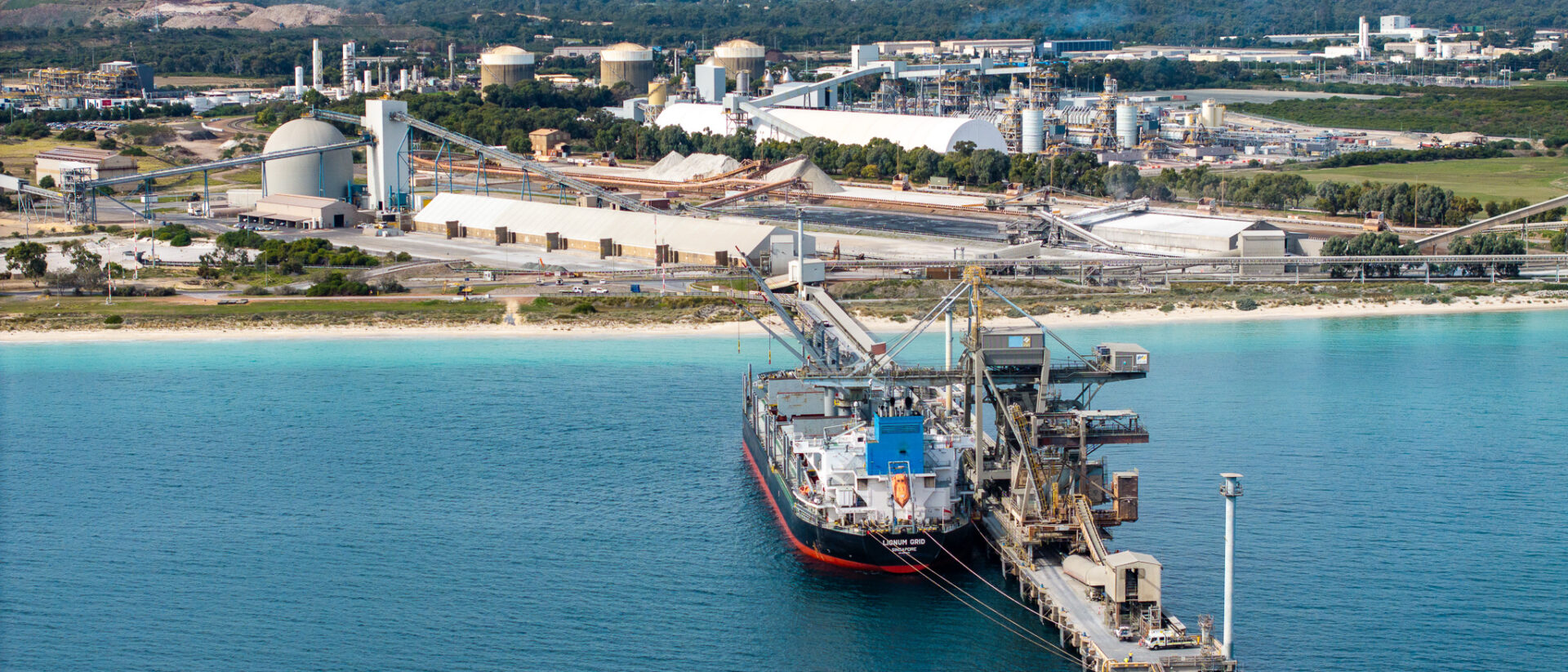
ABHR sat down with Wallbridge Gilbert Aztec (WGA) to learn about its latest shiploading project in Kwinana and its significance to Western Australia and the country.
As Western Australia’s Kwinana Bulk Terminal prepares for a new shiploading system, engineers are balancing long-term capacity requirements, changing trade demands, and increasingly stringent environmental expectations.
For Wallbridge Gilbert Aztec (WGA) principal mechanical engineer James Wehr, the project is as much about future-proofing infrastructure as it is about replacing ageing equipment.
Leading the mechanical engineering component of the redevelopment, Wehr said the opportunity to influence the project from its earliest stages has allowed the engineering team to rethink how the terminal should operate well into the future.
With more than three decades of experience across mining, heavy industry, and materials handling, Wehr has overseen mechanical engineering projects ranging from steelworks to major mining operations.
On the Kwinana Bulk Terminal redevelopment, he is leading both WGA’s Adelaide-based mechanical team and the company’s national mechanical engineering group. The terminal has undergone a significant operational shift in recent years.
Once serving both import and export markets, it is now dedicated solely to imports following the decommissioning of its previous shiploader.
Despite this, Wehr said the facility remains one of Western Australia’s most important bulk handling gateways.
“It’s a significant gateway for bulk materials into and out of Kwinana in particular, but Western Australia in general.
“Significantly, they bring all the clinker that makes cement through the facility, and the majority of the state’s imports come through the terminal.”
Replacing such critical infrastructure requires looking well beyond today’s operational requirements.
Wehr said determining the right equipment size and performance capability is one of the project’s most important design considerations.
“It’s a very long design life, so it’s important to make sure there’s enough capacity for whatever the future might hold,” he said.
That includes understanding how shipping requirements may evolve over the coming decades.
“It’s been key to understand what size vessels they want to load, because now they don’t really handle anything above a particular size.
“The shiploader needs to be big enough to accommodate those types of bigger vessels in the future.”
Early involvement shapes the outcome
The project was released to market through an open tender in September 2025, with WGA securing the engineering contract late in 2025.
According to Wehr, the biggest advantage was getting involved while the concept design was still relatively undeveloped.
“One of the key factors is we got in very early,” he said.
“It’s been good to be able to have direct influence over the project in the very early stages to shape what it will look like.”
Early engagement has meant that key design decisions can be made while the design is progressing to enable a more integrated design.
“Sometimes what can typically happen is the configuration is set by the time they go to the market to get the engineering,” Wehr said.
“But this time it was different, so it allowed us to almost start from scratch.”
The opportunity has enabled the project team to reassess equipment layout, operational capability and future flexibility rather than simply refining an established concept.
Managing interfaces challenges
Like many major port infrastructure projects, the redevelopment has required coordination across multiple contractors.
One of the most significant challenges has been integrating the shiploader design with a jetty designed under a separate contract which is not uncommon.
As a result, interface management became a critical part of the engineering process.
To overcome this, the project team has focused on creating opportunities for direct engagement wherever possible.
“We have pushed hard to get those face-to-face meetings happening so that both parties know what’s happening,” Wehr said.
“It’s about using what opportunities we have effectively and remaining focused on the task at hand.”
The project has now reached approximately 30 per cent design, with around 12 months of engineering work still to be completed.
Beyond replacing ageing infrastructure, the redevelopment aims to significantly increase the terminal’s operational versatility to enable trade facilitation.
Rather than handling only one commodity stream at a time, the upgraded facility is being designed to manage multiple products simultaneously while supporting both import and export operations.
“The terminal will have the ability to import two different types of products at the same time and be able to import and export at the same time,” Wehr said.
“The terminal should be better suited to the products and volumes it’s importing.”
The redesign will also allow some reallocation of trades to the new facility, creating greater flexibility across the broader port operation.
Alongside productivity and operational capability, environmental performance has become an increasingly important consideration in shiploader design.
Wehr said modern projects place far greater emphasis on controlling product spillage, preventing contamination and managing transitions between different bulk commodities.
“One of the biggest trends we’re seeing in both shiploading and unloading is around environmental controls, particularly surrounding jetties,” he said
“There are very strict environmental regulations around jetties, so how we manage and clean up from the shiploader and swap between different commodities becomes very important.”
As ports continue to modernise, these environmental considerations are becoming integral to engineering design rather than being addressed after construction.
For projects such as Kwinana, the challenge is no longer simply replacing ageing equipment but developing infrastructure capable of supporting future trade requirements.
Article by Australian Bulk Handling Review